Inside the Success of Leading Basketball Club Teams in San Diego
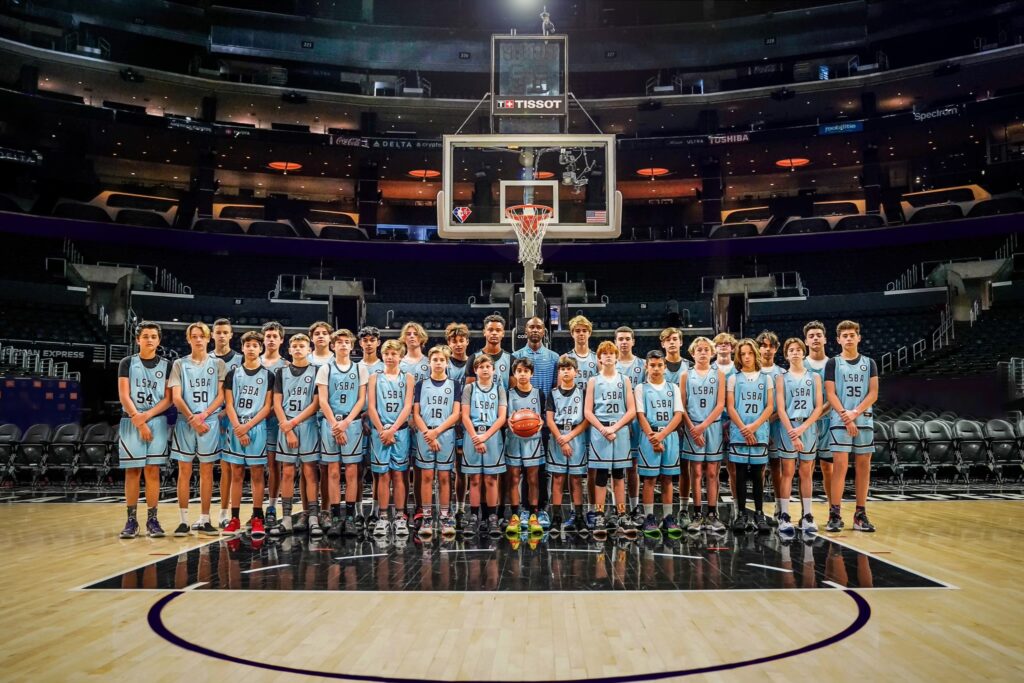
San Diego has never needed to copy another city’s basketball culture. It has built its own version, shaped by climate, geography, family routines, school calendars, traffic patterns, and a youth sports scene that is both ambitious and practical. Anyone who has spent time around high level club basketball in the county sees the same thing quickly: the best programs are not simply collecting talent. They are building systems that keep players improving, families engaged, and coaches aligned over time.
That distinction matters. Plenty of youth basketball organizations can produce a strong season, especially if they land a gifted age group or a well connected coach. Fewer can stay relevant year after year. Fewer still can develop players with enough consistency that high school staffs trust them, parents recommend them, and athletes return in the off-season because the gym has become part of their routine. When people talk about the strongest Basketball Club Teams San Diego has to offer, they are usually describing programs that have figured out how to make progress repeatable.
The success of those teams looks obvious from the outside. Tournament wins. Strong social media clips. Packed tryouts. College interest for older players. What is less visible is the daily structure underneath it all. Good clubs are rarely built on one exciting trait. They are built on dozens of small, disciplined choices that stack up over years.
Talent matters, but fit matters more
The biggest mistake outsiders make is assuming the strongest club teams just recruit the best scorers and let the rest sort itself out. At younger ages, that can work for a weekend or two. Over a full season, it usually breaks down. The leading teams in San Diego tend to value fit almost as much as raw ability.
A player who can score 20 points in a loose game is useful. A player who sprints back in transition, rotates on the weak side, and accepts a smaller offensive role might be more valuable in a serious club environment. That is especially true in older divisions, where everybody can play a little and the margins shift toward habits, spacing, decision making, and composure.
San Diego’s club landscape rewards teams that understand chemistry early. The county is spread out enough that commitment has to be real. A family driving from North County, Chula Vista, or East County to practices twice a week and tournaments on weekends needs to believe the environment is worth it. Players feel that investment too. If the roster is poorly assembled, frustration surfaces fast. Too many ball dominant guards, not enough size, one coach preaching discipline while another tolerates freelancing, all of it shows up by midseason.
The stronger programs usually solve this before the season starts. They do not just evaluate who can make shots in a tryout setting. They watch how players respond to coaching, how they share the ball in cramped gym space, how they defend after mistakes, and how they carry themselves between drills. Those details often predict team success better than highlight plays.
The best clubs coach the middle, not just the stars
A lot of youth programs know how to feature their top one or two players. That is not a special skill. The better Basketball Club Teams San Diego families seek out tend to do something harder. They improve the middle of the roster.
This is where games swing. The seventh player who learns to close out under control. The reserve big who finally understands when to screen and when to dive. The wing who stops overdribbling and starts making the next pass. These players decide whether a team can survive foul trouble, long tournament days, or a matchup against a deeper opponent.
In practical terms, strong clubs build practices where everybody gets coached with intent. Not performative yelling, not generic praise, but direct correction tied to repeatable habits. A good coach can say, “Your feet were fine, but your hips opened too early,” or “You beat your defender, but you missed the low help rotating from the corner.” That kind of instruction sounds small. Over months, it changes games.
I have seen teams with one obvious future college player get knocked out by groups with better role definition and better habits from spots six through ten. That result usually surprises people who only watched warmups. It rarely surprises coaches who understand how club basketball actually works.
San Diego’s geography shapes winning programs
A club in San Diego is not operating in a vacuum. Geography influences everything from attendance to player retention. A practice plan that looks great on paper can fail if it ignores commute times, school obligations, and the simple reality that families cannot live in the car all week.
Leading programs respect this. They choose gym locations carefully, or they create training structures flexible enough to serve players from several areas. Some split skills work and team practices across the week to reduce burnout. Others are selective about tournament schedules, knowing that a badly planned calendar can wear down families by spring.
This is an overlooked part of success. In youth sports, logistics often become culture. If players arrive rushed, late, and stressed, the gym feels different. If a club communicates early, sticks to schedules, and runs efficient practices, trust grows. Parents talk to each other. Siblings come along. Families stay.
San Diego also sits within a broader Southern California basketball ecosystem that is both an opportunity and a challenge. Strong teams can find meaningful competition without leaving the region for every event. At the same time, that depth means reputations are earned slowly. Programs cannot rely on local dominance against weak fields. They need to test themselves against teams from Los Angeles, Orange County, the Inland Empire, and beyond. The best clubs know how to balance exposure with development. They do not chase every event just because it looks prestigious.
Player development is not a slogan
Every club says it develops players. The phrase has become so common that it often means very little unless you watch what happens in practice.
Real development is specific. It begins with footwork, balance, timing, and decision making long before it reaches branding language about exposure or next level opportunities. In younger age groups, the strongest programs in San Diego usually resist the temptation to skip steps. They still teach jump stops. They still demand proper pivots. They still spend time on finishing angles, passing windows, stance discipline, and spacing.
That can look almost old fashioned to parents who want instant results. It is not. It is efficient. A player with clean fundamentals catches up faster when the game speeds up later. A player built on shortcuts often looks dominant at 12 and overwhelmed at 16.
The same applies to skill sessions. There is a difference between a workout and a development plan. Workouts can be intense, sweaty, and entertaining while still producing very little transfer to games. Development plans are narrower and sometimes less flashy. They focus on what a player actually needs. A guard who cannot change pace does not need 200 random shots off cones. A post player who struggles to read double teams does not need endless isolated back to the basket reps without decision pressure.
The strongest clubs pair repetition with context. They teach players not only how to execute a move, but when to use it, why it works, and what the defense is showing. That is the bridge from gym skill to game production.
Coaching continuity separates good teams from temporary ones
One excellent coach can lift a team. A stable coaching staff can build a program.
This is one of the less glamorous reasons some clubs stay near the top. Their coaches share a language. They may differ in personality, but they are teaching compatible concepts. Defensive terminology matches across age groups. Expectations for effort and accountability feel familiar. Younger players entering the system are not starting from scratch every season.
When continuity is missing, players spend too much time adjusting to style changes, mixed messages, and competing priorities. One coach values pace at all costs. Another wants every possession controlled. One tolerates contested shots if the player is talented enough. Another benches the same action immediately. Confusion follows, and development slows.
Continuity also helps in moments of adversity. Every club team eventually hits a rough stretch. It might be injuries, school conflicts, a growth spurt that temporarily throws off coordination, or simply a bad month where the group stops defending with urgency. Programs with staff alignment usually handle these dips better because they are not reinventing themselves each time results wobble.
San Diego’s better clubs often have another advantage here. Many of their coaches are connected to local high school, college, or long term training environments in some way, formally or informally. That tends to sharpen expectations. Coaches who have seen what older players actually need are less likely to waste time on empty drills or short term gimmicks.
Families are part of the infrastructure
This is not always comfortable to say, but it is true. Youth club basketball is not just a coaching operation. It is a family ecosystem. Programs that pretend otherwise tend to fracture.
The best clubs are not the ones that let parents run everything. They are the ones that communicate clearly enough that parents do not feel forced to intervene. Expectations about playing time, travel, costs, attendance, off-season work, and conduct need to be explained early and reinforced often.
San Diego families are generally savvy sports consumers. Many have navigated soccer, baseball, volleyball, or other club environments before. They know when a basketball program is organized and when it is improvising. They also know when they are being sold a dream rather than a process.
Strong clubs usually earn trust in simple ways. They start on time. They reply to questions. They do not oversell college outcomes to middle school players. They are honest about team level and role competition. If a player needs more work before joining the top team, they say so. If a family is paying significant dues, they can see where the value lives, in coaching, gym access, competition level, and developmental structure.
One of the clearest markers of healthy culture is how families behave after a tough loss. In unstable programs, blame starts in the parking lot. In stable ones, people are disappointed but not shocked. They know what the team is building, and they trust the adults leading it.
Tournament success comes from recovery as much as strategy
Club basketball weekends are a grind. Anyone evaluating team quality from a single early game often misses the full picture. The teams that are still sharp in the fourth or fifth game, depending on format, usually have better habits than the teams that looked explosive for one stretch.
Depth matters, of course, but recovery habits matter too. So does emotional regulation. Young players can get drained by bad officiating, delayed schedules, loud gyms, or one rough shooting game. The top teams in San Diego often prepare for this better than others. Their benches stay engaged. Their coaches manage minutes with the bigger weekend in mind. Their players bring enough food, hydrate, and learn how to reset between games instead of stewing over mistakes.
A seasoned coach once told a group after a midday loss, “The team that recovers best will look like the most talented team by dinner.” He was right. By the final game, the group that handled the day professionally had a clear edge, even though the talent level was similar.
That is not accidental. It reflects how the club has taught players to carry themselves.
Exposure follows development, not the other way around
Families understandably think about high school opportunity and, later, college recruiting. But the strongest Basketball Club Teams San Diego offers usually understand sequence. Exposure is useful only when the player is ready for it.
A player can be seen by the right people and still gain nothing if the game does not hold up. College coaches and high school staffs are not only looking for flash. They look for role translation, body language, coachability, and whether a player helps winning basketball. They also notice what happens between possessions. Does the player communicate? Run the floor? Defend without gambling? Recover from mistakes?
Leading clubs tend to talk about these realities more honestly than weaker ones. They know a tenth grader does not need a sales pitch nearly as much as a development path. Sometimes the right move is playing on a slightly lower profile team where touches, reps, and confidence can grow. Sometimes it is practicing with a stronger group even if game minutes are limited for a season. Judgment matters.
A smart club can explain that trade-off without making families feel ignored. That skill, communication paired with experience, is one reason certain programs keep their reputation.
What successful clubs usually get right
There are patterns that show up repeatedly when you watch strong teams over several seasons.
- They teach a clear identity, whether that is defensive pressure, half court execution, pace, or versatility, and they reinforce it consistently.
- They make practices demanding without wasting time, so players improve even when tournament results fluctuate.
- They evaluate players honestly, including effort, decision making, and adaptability, not just scoring output.
- They build trust with families through communication and structure, which supports retention and team stability.
- They think long term, especially with younger athletes, resisting the urge to chase short lived wins at the expense of development.
None of those qualities guarantee a championship. They do create the conditions where good teams can keep becoming better teams.
The trade-offs every serious program faces
Success is not clean. Every club making competitive decisions has to navigate trade-offs, and there is no universal formula.
A highly selective roster may raise practice quality, but it can also shrink developmental patience if younger players are constantly worried about replacement. A broad program with multiple teams can create a healthy pipeline, but only if coaching quality is strong across levels. Heavy travel might raise competition and visibility, but it also drives up cost and fatigue. A stricter coaching style can produce accountability, though it may fail with athletes who need more relational guidance before they respond.
San Diego clubs feel these tensions acutely because the market is strong enough that families have options. That can be healthy, since it forces programs to sharpen https://rowanhwve766.bearsfanteamshop.com/basketball-club-teams-san-diego-players-should-know-about their standards. It can also encourage short term thinking if clubs start promising more than they can consistently deliver.
The best organizations are rarely perfect. What they do well is make deliberate choices and stand behind them. If they emphasize development, the practice design reflects it. If they prioritize national level competition, the roster and travel expectations match that reality. If they aim to serve a broader range of athletes, they build enough infrastructure to do it credibly.
Why local reputation is earned slowly
In youth basketball, hype can travel quickly. Real reputation moves more slowly. Coaches talk. High school staffs compare notes. Parents watch how former players progress. Opposing teams remember who is disciplined, who adapts, and who falls apart when a game gets physical.
That long memory matters in San Diego. It is a big region, but basketball circles are still connected. A club’s name carries weight only when enough people have seen its values hold up over time.
This is why the top programs tend to be careful about growth. Expanding too fast can dilute coaching, weaken culture, and confuse standards. Staying smaller can preserve quality, but only if the organization can still offer enough opportunity for players at different stages. There is no easy answer. The successful clubs are usually the ones willing to protect what makes them effective, even when expansion looks tempting.
What players actually gain from these environments
For the athletes, the benefits of a strong club experience go beyond winning trophies. They learn to compete for roles without taking feedback personally. They learn how to prepare for a long day and still defend in the final quarter. They learn what it feels like to be held to a standard by coaches who notice details. They also learn that growth is uneven. A player may struggle for months with pace and confidence, then suddenly look settled once the game starts making sense.
That process is hard to appreciate in real time, especially for younger families. But it is often the hidden value inside leading club teams. The best programs teach players how to function inside structure without losing creativity. That balance is more important than any weekend result.
Choosing wisely in a crowded market
Families evaluating Basketball Club Teams San Diego should look past branding first. Watch a practice if possible. Listen to how coaches correct mistakes. Notice whether players understand where to stand and why. Ask how the club handles development for nonstars. Ask what a typical week looks like in season, not just what tournaments appear on the calendar.
A useful question is simple: if your child were not one of the top two players on the team, would this still be a good place to improve? Strong clubs can answer yes with evidence. Weak ones often pivot back to promises about exposure, connections, or past success stories.
Another clue is how the team plays when things go wrong. Do players turn on each other after a few bad possessions, or do they settle into habits? Do coaches become frantic, or do they coach with clarity? Winning teams are not defined by never wobbling. They are defined by how quickly they regain shape.
The success of leading basketball club teams in San Diego is not mysterious. It is built in ordinary gym hours, in careful roster choices, in honest communication, in player development that values substance over show, and in a culture sturdy enough to survive pressure. The public sees the wins. The people inside the gym know the real story is deeper, and much more demanding.
Lamont Smith Basketball Academy
888 Clairemont Mesa Blvd Suite T-2, San Diego, CA 92123
(619) 639-8778
FAQ About Basketball Club Teams San Diego
How can a player join an LSBA club team?
Players are evaluated during practices so the coaching staff can recommend an appropriate team and development level. Families should contact the academy to confirm current openings and evaluation details.
Are club teams available for newer basketball players?
Yes. LSBA describes multiple levels, including a developmental option for newer players as well as more competitive teams for athletes with prior club experience.
What do LSBA club team practices emphasize?
Practices emphasize basketball fundamentals, team defense, structure, communication, and player development. The specific focus may vary according to the team and experience level.
Do all LSBA teams travel?
Travel expectations vary by level. Some teams focus on local competition, while advanced teams may participate in tournaments elsewhere in Southern California or beyond. Families should confirm the current schedule before enrolling.