How Basketball Club Teams San Diego Support Long-Term Growth
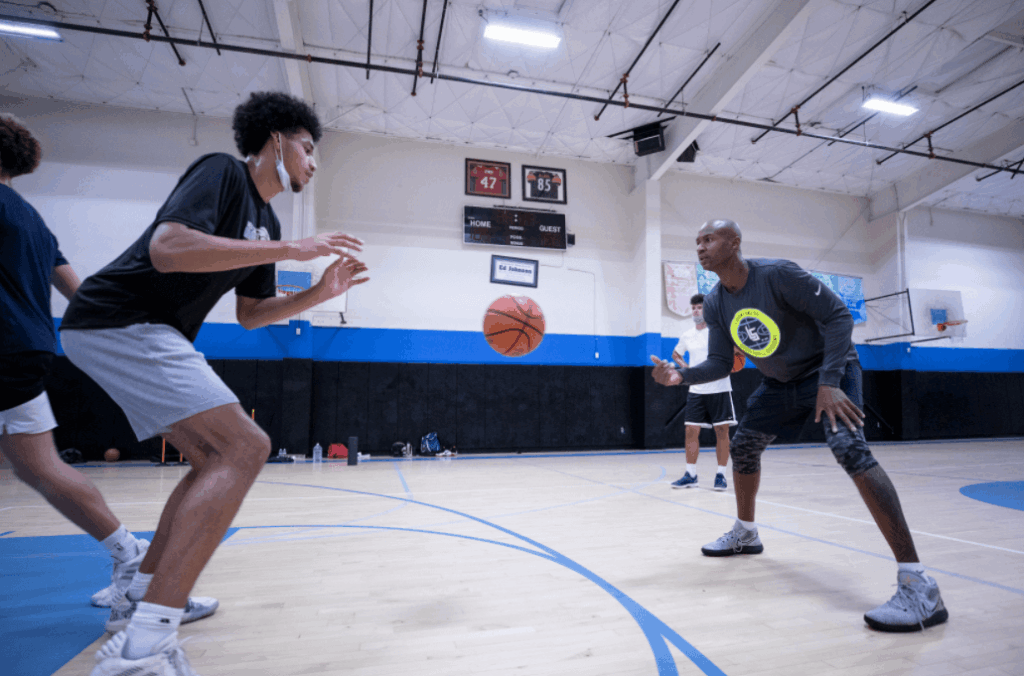
Parents often start looking at club basketball for a simple reason. Their child loves the game, wants stronger competition, and needs a place to keep developing beyond a short school season. What becomes clear over time, though, is that the right program does more than sharpen a crossover or improve a jump shot. Strong club environments shape habits, expectations, resilience, and decision-making in ways that can carry a player for years.
That long view matters in a city like San Diego, where athletes have access to year-round training, competitive leagues, private instruction, and a wide range of team options. The phrase Basketball Club Teams San Diego covers a broad landscape. Some programs are highly structured and development-focused. Others lean heavily toward tournament exposure. Some serve younger beginners who need fundamentals and confidence. Others work with serious high school players preparing for varsity roles, college recruiting, or simply a more demanding level of play.
When families choose well, club basketball can become one of the most consistent developmental settings in a young athlete’s life. When they choose poorly, it can turn into an expensive cycle of weekend games, unclear coaching, and limited growth. The difference usually comes down to philosophy, coaching quality, and whether the program is built for long-term progress rather than short-term optics.
Growth starts with repetition that actually means something
A young player does not improve because of a logo on a jersey. Improvement comes from repeated, purposeful work in the right environment. That sounds obvious, but it gets lost easily in club sports. Plenty of teams play a packed tournament schedule while spending too little time teaching players how to make reads, defend properly, or move without the ball.
The better Basketball Club Teams San Diego programs understand that development is cumulative. A seventh grader learning to jump stop under pressure, keep their eyes up in transition, and rotate on help defense may not dominate a weekend event. Yet those details become the base for everything that follows. By the time that player reaches junior or senior year, the technical foundation separates them from athletes who relied mostly on speed, size, or raw instinct.
This is especially true in basketball because the game exposes weak habits quickly. A player can score 18 points one weekend and still be behind in their long-term growth if they are turning the ball over under pressure, losing track of assignments, or taking poor shots. Good club coaches do not get distracted by surface stats. They watch whether a player’s footwork is cleaner in March than it was in January. They watch whether the athlete communicates more, processes the game faster, and responds better to physical play.
That kind of growth does not happen by accident. It comes from practices that have intention. In the strongest gym settings, drills connect directly to game situations. Ball-handling includes decision-making, not just cones. Shooting work includes pace, balance, and reads off movement. Defensive drills teach positioning, timing, and communication, not just effort. Players leave tired, but more importantly, they leave better.
Competition reveals character, but structure builds it
One of the biggest strengths of club basketball is the quality of competition. Facing teams from across the region, and sometimes across the state, pushes players beyond what many local recreational or seasonal environments can offer. Athletes are forced to adjust to size, speed, pressure defenses, and skilled opponents who punish mistakes.
Still, competition by itself does not guarantee growth. A player can lose confidence just as easily as they can gain toughness if the environment lacks structure. I have seen talented players get overwhelmed because no one had taught them how to recover after a bad stretch. A few turnovers led to panic. A poor shooting half turned into visible frustration. The game sped up, and their body language collapsed.
Strong club programs use competition as feedback, not as a verdict. After a rough weekend, the best coaches do not simply say the players need to play harder. They identify specific breakdowns. Maybe the guards struggled against traps because spacing was poor. Maybe the bigs were late to help because communication was missing. Maybe a player rushed shots because they had not yet learned how to create balance under closeouts.
This is where long-term growth begins to show. Players start seeing setbacks differently. A bad game becomes film to study, not a label. An athletic mismatch becomes a problem to solve, not a reason to shrink. Over time, that shift in mindset is enormous. It teaches athletes to separate emotion from evaluation, which is useful in sports and in life.
Coaching is the real product
Families sometimes focus on uniforms, social media presence, or tournament branding. Those things can be nice, but they are not the core value. Coaching is the real product in any club program.
A strong coach does more than organize practices and call plays. They teach players how to think. They know when to slow a player down and when to challenge them. They can tell the difference between a confidence issue and a skill issue. They understand that twelve-year-olds, fourteen-year-olds, and seventeen-year-olds need different kinds of correction, even when the mistake looks similar.
In San Diego, that matters because there is a wide range of coaching backgrounds across the club scene. Some coaches bring school basketball experience, college playing backgrounds, or years of youth development work. Others are enthusiastic and well-meaning but lack the patience or teaching skill to build players over time. Experience alone is not enough, of course. Some former players know the game but cannot teach it clearly. Some younger coaches, with less pedigree on paper, do an excellent job because they prepare well, communicate clearly, and care about fundamentals.
Parents often ask what they should look for during a tryout or early practice window. The answer is not just whether the coach is loud, intense, or charismatic. It is whether teaching is happening. Are corrections specific? Do players understand why they are doing a drill? Is the practice organized? Do weaker players get coached, or only the top performers? Does the staff hold athletes accountable while still keeping them engaged?
Those details reveal whether a team is designed to win a few games now or develop better players over the next several years.
The hidden value of role definition
One of the least appreciated benefits of a good club team is role clarity. Young athletes often believe growth means getting more shots, more freedom, or more attention. In reality, growth usually accelerates when a player understands exactly what the team needs from them and learns to perform that role at a high level.
A guard might need to become reliable at initiating offense under pressure. A wing might need to defend the other team’s best scorer and make quick decisions off the catch. A post player might need to screen well, rebound outside their area, and finish through contact rather than waiting for designed touches.
These roles are not limitations. They are stepping stones. Players who master a role gain trust, confidence, and game awareness. Once those qualities become consistent, their responsibilities expand naturally. This is one reason club basketball can support long-term development better than less structured environments. The athlete learns how team success connects to individual progress.
That lesson carries forward. High school coaches value players who understand spacing, timing, defensive effort, and role discipline. College coaches value it even more. So do employers, mentors, and leaders in every field. The player who learns to contribute before demanding recognition often matures faster than the one who is always chasing status.
Development is not linear, especially in adolescence
One challenge families face in youth basketball is interpreting progress too quickly. A player can look dramatically better over one three-month period, then appear to stall for six months. Another may struggle early, then make a sudden jump after a growth spurt, improved confidence, or a change in role.
The best Basketball Club Teams San Diego programs account for that reality. They do not panic when a young player has a flat stretch. They keep teaching. They track patterns rather than reacting to one weekend. That patience is especially important during middle school and early high school years, when physical maturation can vary widely.
It is common to see a player who dominates at age thirteen because they are stronger and earlier to develop physically. It is just as common to see that same player level off later if skill development did not keep pace. Meanwhile, a smaller or less assertive player may look ordinary for a while, then become very https://arthurwnpo794.fotosdefrases.com/top-benefits-of-joining-basketball-club-teams-in-san-diego effective once strength, confidence, and decision-making catch up.
This is why long-term development requires judgment. Coaches and parents both need to understand the difference between temporary production and sustainable growth. Scoring numbers can be misleading. A player who averages ten points through smart cuts, good defense, ball movement, and efficient shots may be developing better habits than a player averaging eighteen on forced attempts and minimal defensive effort.
The clubs that support lasting growth know how to stay grounded during these fluctuations. They praise improvement without overhyping it. They address weaknesses without framing them as permanent. That balance is hard to find, and it matters.
Exposure has value, but only after substance
At some point, many families begin to think about exposure. That usually means higher-profile tournaments, stronger competition circuits, and opportunities for school or college coaches to watch. Exposure can be useful, but it is often misunderstood.
A player is not helped by being seen before they are ready to perform in a meaningful way. If the skill base is incomplete, extra visibility does not create opportunities. It can actually create frustration. I have watched families chase elite events too early, only to realize their athlete needed another year of ball-handling, strength, confidence, or defensive growth before that level made sense.
The better approach is to build substance first. Once a player can handle pace, make reads, compete physically, and contribute consistently, stronger events become an amplifier. They showcase what is already there. Until then, development should stay ahead of exposure.
This is an area where club leadership must be honest. Promising visibility is easy. Delivering thoughtful progression is harder. Families should ask direct questions about how the team balances tournament play, practice time, individual improvement, and realistic pathways for players at different levels.
What families should look for in a club environment
Choosing a program can feel overwhelming because many teams make similar claims. Most say they develop players. Most say they provide strong competition. Most say they care about character. The useful differences show up in daily operations, not marketing language.
Here are a few markers that tend to separate stronger developmental programs from the rest:
- Practices are organized and teaching-centered, not just scrimmage-heavy.
- Coaches can explain a player’s current strengths and next growth areas with specificity.
- Playing time expectations are communicated honestly, even when the answer is not what families want to hear.
- Athletes are held accountable for effort, attitude, and decision-making, not only for scoring.
- The program has a clear age-appropriate philosophy rather than treating every team the same way.
That last point deserves more attention than it usually gets. A second-grade or fourth-grade player needs joy, fundamentals, and confidence-building. A middle school athlete needs structure, habits, and broad skill development. A varsity-level high school player may need position refinement, film review, and higher-level competitive reps. A club that uses one formula for every age group is usually missing something important.
San Diego offers opportunity, but also noise
San Diego is a strong market for youth basketball because the player pool is deep and the weather allows for year-round activity. That creates real opportunity. Players can find training support, competitive events, and multiple pathways to improve. It also creates noise.
Families are often pulled in several directions at once. One trainer says the athlete needs more individual work. One coach says the player should focus on team reps. A school program has its own expectations. Another club is recruiting. Social media clips make every gym look intense and productive. It becomes easy to confuse activity with progress.
This is where clarity helps. Long-term growth usually comes from consistency more than variety. A player does not need five voices. They need alignment. The most successful situations tend to have a manageable training structure, a coach who can communicate honestly, and a family willing to prioritize fit over hype.
Basketball Club Teams San Diego can be a powerful part of that structure when the program reinforces core habits rather than scattering attention. If an athlete is practicing with purpose, competing against quality opponents, recovering properly, and staying connected to school responsibilities, progress tends to show over time. Not every month, but over a year or two, the difference becomes hard to miss.
The best programs develop the person, not just the player
It is easy to talk about basketball in terms of mechanics and competition, but the strongest clubs also shape maturity. They teach punctuality, coachability, communication, and response to adversity. Those traits are not decorative. They directly affect performance.
A player who arrives on time, listens closely, and accepts correction improves faster. A teammate who communicates on defense and encourages others makes the whole group better. An athlete who can recover emotionally after a poor performance will outlast peers who spiral every time the game gets difficult.
These lessons tend to stick because club basketball places players in repeated pressure situations. There are early morning games, tight finishes, travel fatigue, lineup competition, and moments when things do not go their way. In a healthy environment, those moments become training for composure and accountability.
I have seen players who were quiet and uncertain at first become natural leaders by late high school, not because anyone handed them a title, but because they had spent years learning how to prepare, compete, and steady themselves under pressure. That kind of growth rarely shows up in a stat line, yet it is often the most valuable outcome.
When club basketball is not helping
It is also important to say that club basketball is not automatically beneficial. Some programs overplay athletes and underteach them. Some create unrealistic expectations. Others build cultures where winning this weekend matters more than health, development, or confidence.
A few warning signs usually appear early. Practices feel chaotic. Feedback is vague or overly negative. Players are pigeonholed too soon. Tournament schedules are packed, but growth is hard to identify. Parents feel pressure to stay quiet rather than ask reasonable questions. The athlete comes home discouraged more often than energized.
None of those issues mean a player should quit the sport. They usually mean the fit is wrong. A different club, a different coach, or even a step back into a more developmental setting can reignite progress. Families sometimes worry that changing course means losing momentum. In many cases, it is exactly how momentum returns.
Why the long game matters most
The athletes who benefit most from club basketball are not always the ones who shine earliest. They are often the ones who stay teachable, stay patient, and spend years in environments that reward real improvement. They may not lead every tournament in scoring. They may not go viral online. What they do is build a game that holds up.
They learn how to move, defend, read pressure, make decisions, and compete with discipline. They become more resilient after losses. They understand their role, then grow beyond it. They gain confidence rooted in preparation rather than praise. Those qualities create options, whether the goal is making a stronger school team, earning college interest, or simply becoming a more complete athlete.
That is where Basketball Club Teams San Diego can have their greatest impact. At their best, they offer much more than extra games. They provide sustained coaching, meaningful competition, and a framework for growth during years when young athletes are changing quickly in body, mindset, and ambition.
Families who approach that process thoughtfully usually get the most out of it. They ask better questions. They watch practices, not just scores. They value teaching over branding. They understand that the right club team is not the one that promises the most, but the one that develops the most over time.
For a player who loves basketball and wants to keep growing, that difference can shape not just a season, but the arc of several important years.
Lamont Smith Basketball Academy
888 Clairemont Mesa Blvd Suite T-2, San Diego, CA 92123
(619) 639-8778
FAQ About Basketball Club Teams San Diego
How can a player join an LSBA club team?
Players are evaluated during practices so the coaching staff can recommend an appropriate team and development level. Families should contact the academy to confirm current openings and evaluation details.
Are club teams available for newer basketball players?
Yes. LSBA describes multiple levels, including a developmental option for newer players as well as more competitive teams for athletes with prior club experience.
What do LSBA club team practices emphasize?
Practices emphasize basketball fundamentals, team defense, structure, communication, and player development. The specific focus may vary according to the team and experience level.
Do all LSBA teams travel?
Travel expectations vary by level. Some teams focus on local competition, while advanced teams may participate in tournaments elsewhere in Southern California or beyond. Families should confirm the current schedule before enrolling.